
Lovescape Relationship Type: Keep a Fling Casual
A relationship setting describes who the character is to you. It does not decide the length of a reply, the tone of a joke or how far tonight’s fictional flirt goes.

You wanted a little banter. The reply arrived as a declaration about your future together. Before adding more instructions, ask whether the character’s relationship premise matches the conversation you wanted. A confident personality and a committed relationship are different choices, even when the portrait looks right.
- Use relationship type for the fictional connection, not as a shortcut for reply length.
- Keep a casual premise consistent with the scene and the character’s description.
- Change the specific thing that misses: tone, amount of text or an invented commitment.
- Treat a correction as a request, not a guaranteed lock on the model’s behavior.
This is a public-document guide for AI Fling Chat, checked October 2, 2026. The examples are authored directions for fictional adults, not recorded Lovescape replies or a paid-account test.
What the relationship field establishes
The official Lovescape creation guide, checked October 2, 2026, lists relationship type separately from personality, role, attitude and interaction intensity. It also documents short, medium and long message-length choices. You do not have to ask one relationship label to do all those jobs.
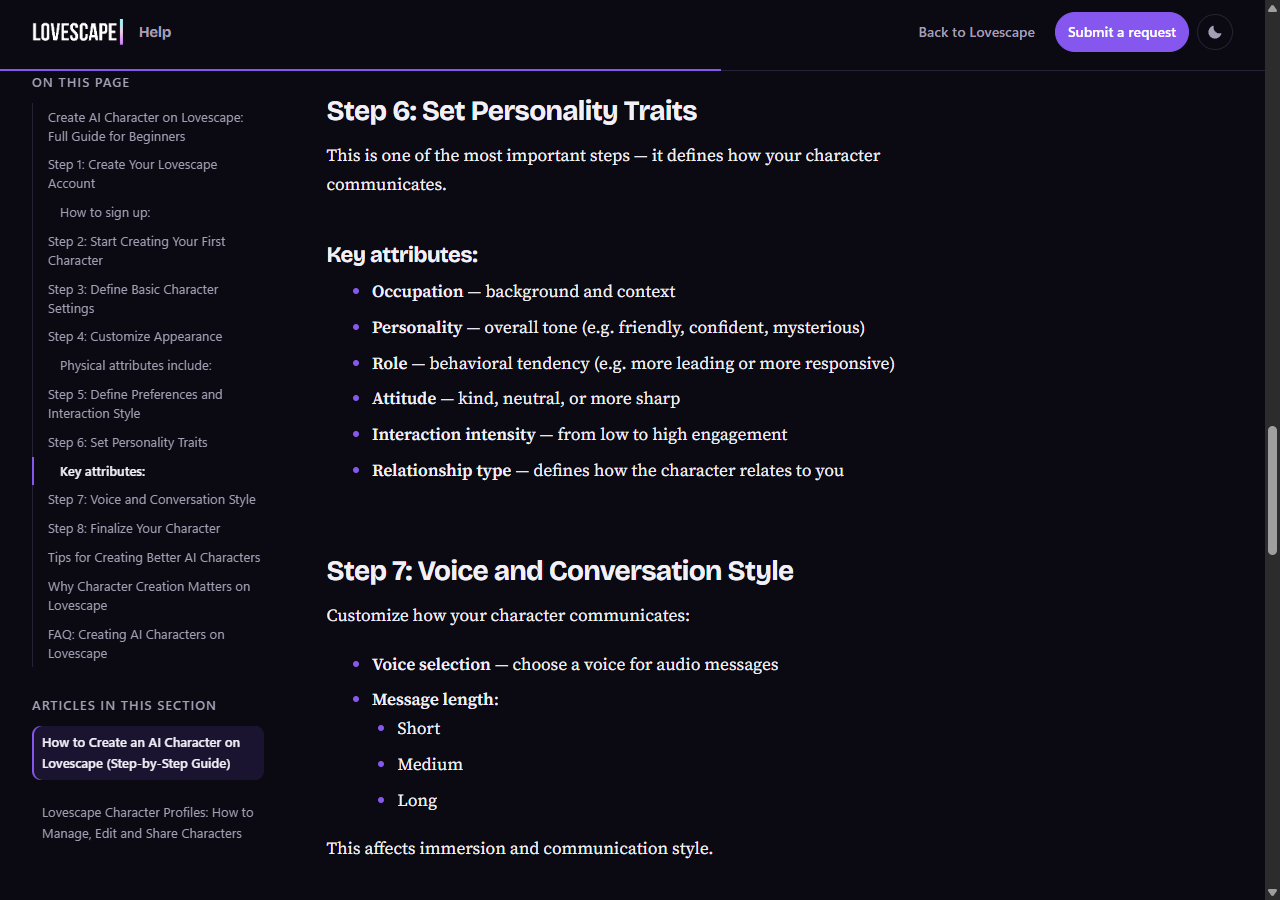
Think of the relationship as the starting premise: what the characters already are to each other. Your writing choice for a casual fling might be two fictional adults who enjoy flirting but have made no promise of exclusivity or a long-term future. That is an authored premise, not the documented wording or behavior of a preset.
Read the available options in your current creator. The public guide does not enumerate them or confirm a choice literally called ‘Fling.’ Select a supported option that fits your intended connection; if none fits, reconsider the character rather than assuming a label exists because this article uses the word. Our getting-started guide explains the difference between browsing a supplied profile and creating your own.
Give each choice one job
A useful decision has four parts. Relationship is the premise. Personality is the style of the fictional person you are writing. Intensity is a separate documented interaction setting; its precise effect is not measured here. Message length concerns the amount of text. Keep your aim for each part simple enough that you can notice when the reply misses it.
- Premise: ‘Two fictional adults meeting for a light flirt, with no previous relationship invented.’
- Personality direction: ‘Witty and direct, with teasing about harmless scene details.’
- Pace request: ‘Stay with this exchange; do not jump ahead to a committed relationship.’
- Length preference: ‘Brief replies that leave space for my next message.’
Those sentences are a planning note, not a list of exact settings to click. Use the documented controls you can see, and put your own scene direction into the conversation. An intensity choice should not be taken as consent to every possible plot turn; decide what happens in the fiction through your own replies.
For instance, a character can be bold while the exchange stays short. It can be warm without the story declaring a shared home or anniversary. You can enjoy a compliment and still keep the premise casual. When writing the character, avoid pairing ‘we just met’ with ‘you have loved me for years’ unless that contradiction is deliberately part of your story.
Decide whether you need a new character at all
A custom character makes sense when the starting relationship is central to what you want to write. If you only want a quick exchange, reading an existing profile may be enough. Look at its description for an already established spouse, a reunion or a serious relationship before you ask for a first encounter. A profile that starts in a different dynamic may keep giving you an opening you did not intend.
Try our chemistry shortlist when choosing from the supplied character descriptions. It organizes preferences; it does not rewrite the profile or change a relationship setting in another service. Likewise, opening the creator from this page does not carry your choices into it.
Lovescape’s character explanation, checked October 2, 2026, describes behavior as shaped by traits, sample chat, the user’s role and conversation context. Relationship type is therefore one part of the setup, not a documented guarantee that every answer will follow your casual premise.
When the reply misses, fix the actual mismatch
A long reply is not necessarily the wrong relationship. Start by asking for less text: ‘Keep your next reply to a few sentences and leave my answer open.’ If the problem is a serious future being invented, correct the premise instead: ‘In this fictional scene we have only just met. Keep the flirting light; neither of us has agreed to a relationship.’ These are authored examples, not claims about how many messages a correction takes.
If the character is joking in a way you dislike, request a different tone without changing the entire story: ‘Make the teasing gentler and about the scene, not about my worth.’ If it writes your acceptance of an invitation, separate its offer from your choice: ‘You can ask me to stay, but leave my answer for me to write.’ Respond to one mismatch at a time so you can judge whether the conversation is becoming enjoyable.
The short scene examples can help you choose an opening that has a concrete subject. A question about a fictional coffee order gives a light exchange somewhere to go without requiring either a lengthy biography or a relationship declaration. Avoid importing a scene whose emotional premise contradicts your chosen character.
Change the character without assuming its history is erased
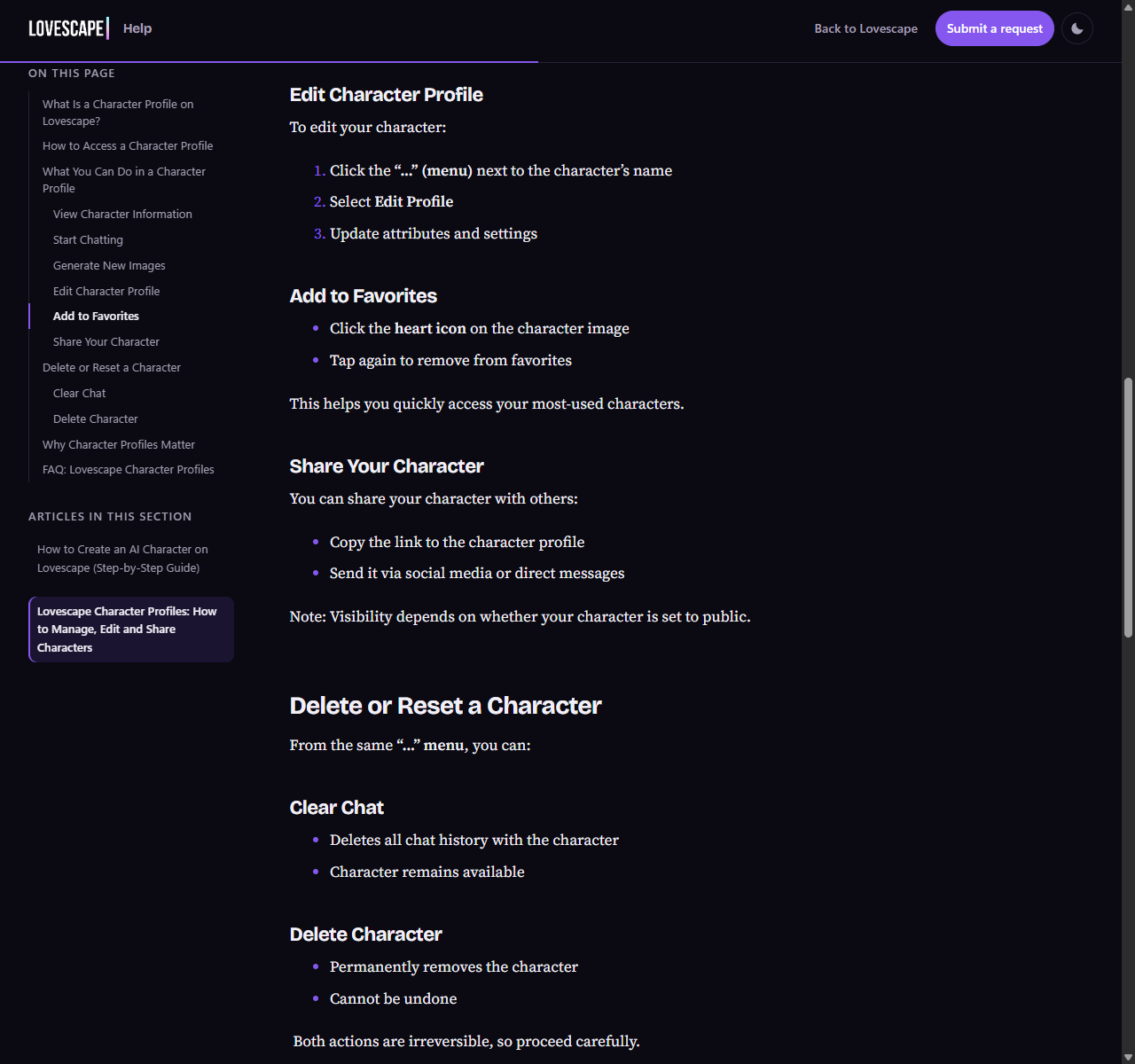
The official profile guide, checked October 2, 2026, documents editing attributes through the character profile menu. It lists Clear Chat separately as deletion of that character’s chat history. Editing a profile is not documented there as a way to erase what the conversation has already established.
For an immediate change, state the new fictional premise clearly. For a lasting character revision, review the attributes available on the profile. Do not clear history merely to experiment with tone: the guide says that action is irreversible. We have not verified that every creation field remains editable or that a relationship change resets all remembered context.
A casual label is still a limited tool
Lovescape’s limitations page, checked October 2, 2026, acknowledges that older topics may be missed and long conversations can become inconsistent. A carefully selected premise can still need a reminder. If you want a guaranteed mode that never becomes affectionate, jealous or serious, the documented settings do not establish that guarantee; this may not be a useful choice for you.
For a short fictional fling, success can be a pleasant exchange that ends where you intended. You do not need to turn it into a persistent relationship or add media to make it count. Keep the premise readable, choose a character that fits it, and finish the scene when you want to leave.
Questions before you start
Does Lovescape have a preset literally named Fling?
The public creation guide documents a relationship-type field but does not list its current options. This article does not verify a named Fling preset. Read the options in your current creator and choose a premise that fits the fictional interaction you want.
Should I choose a confident personality to make the relationship casual?
Confidence is a personality direction, not a definition of the relationship. A confident character can still start from a committed premise. Keep the relationship, tone and scene consistent rather than using one trait as a substitute for the others.
Will a short-message setting stop declarations of love?
Message length concerns how much text appears. A short response can still introduce an unwanted commitment. Correct the relationship premise separately and do not treat brevity as a guarantee about the content of the reply.
Do I need to clear the chat to change the pace?
Not as an ordinary writing step. You can first request a different pace in the conversation. Lovescape documents Clear Chat as an irreversible deletion of history, not a routine tone adjustment. Editing and deleting are separate profile actions.
Can I keep flirting while leaving a long-term relationship undecided?
You can write that as the fictional premise and choose your own replies accordingly. It is a creative direction, not a promise that the model always follows it. If repeated corrections feel like work, choose a different character or end the session.